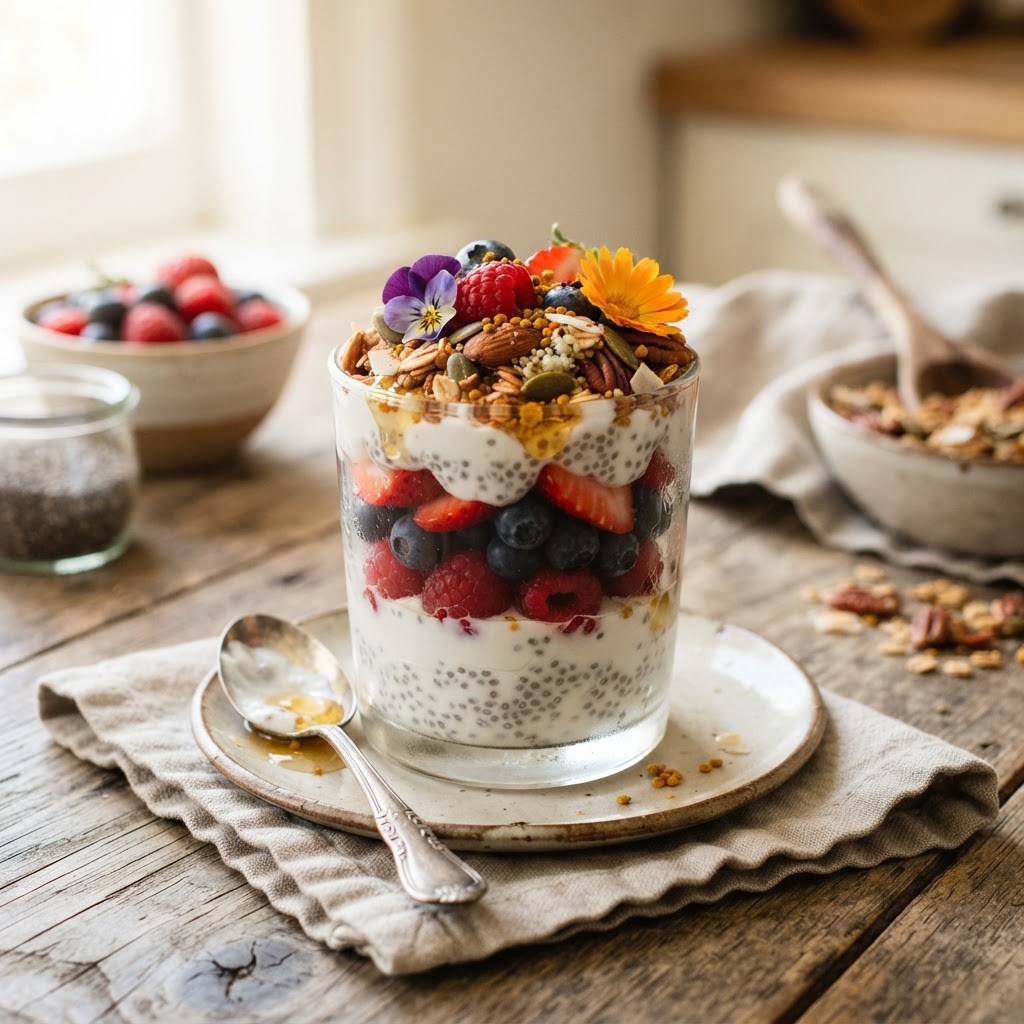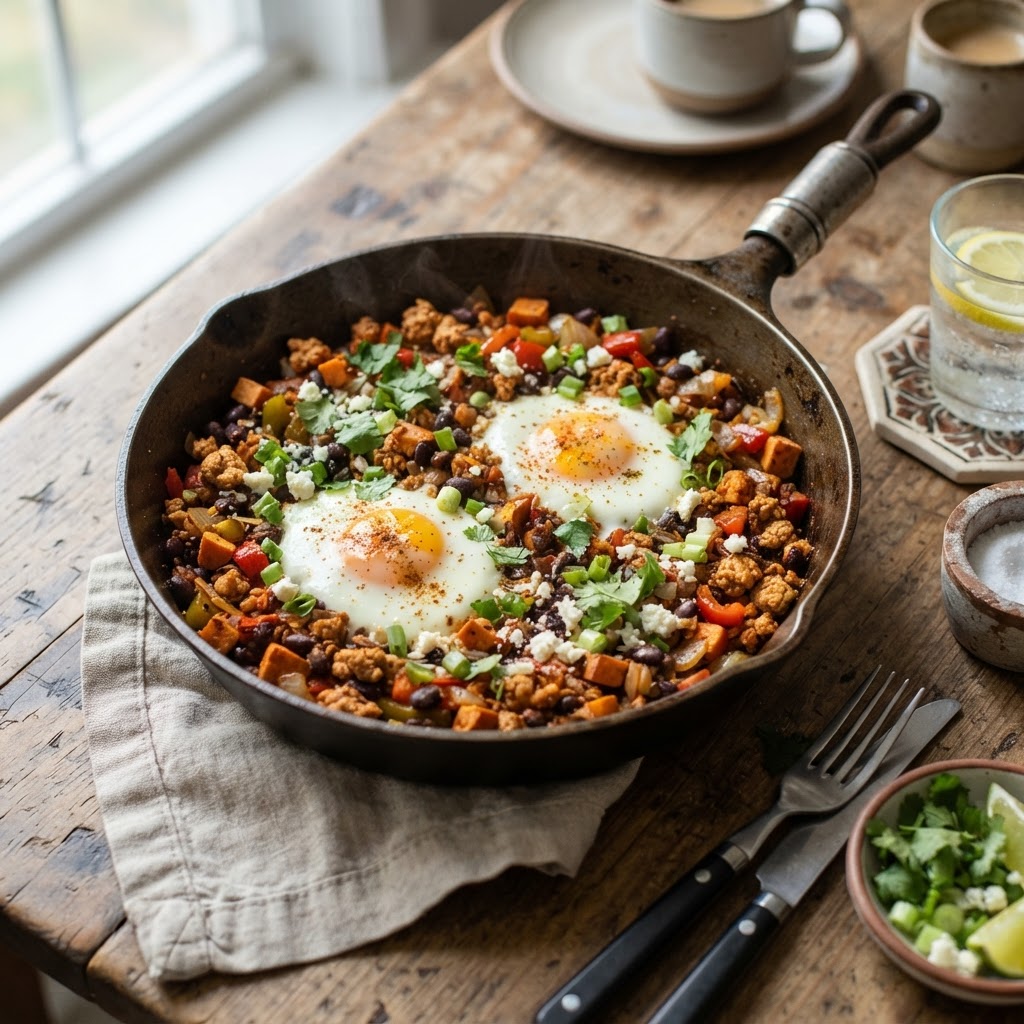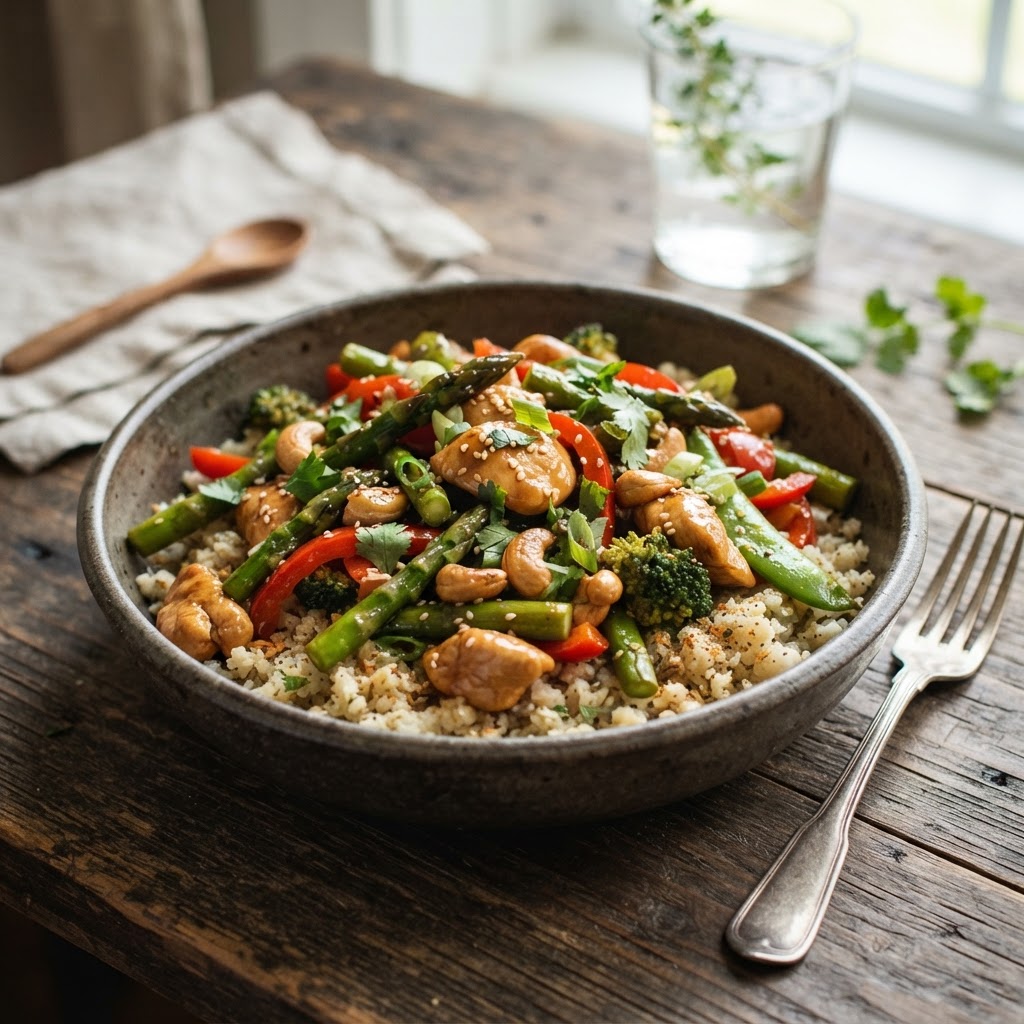
Super High Protein
Why Protein Is the Quiet Healer
Protein is not just for building muscle. It is the nutrient that keeps you full, keeps your blood sugar steady, feeds the muscles you stand on, and gives your gut the amino acids it needs to repair itself. These plates are built to do all of it — at 30 grams or more per serving.
Protein keeps you full, and that changes everything
Protein is the most satisfying of the three macronutrients. It slows digestion, steadies blood sugar, and signals your brain that you have eaten — which is why a high-protein breakfast so often ends the mid-morning hunt for something sweet.
When meals hold you, you eat less without counting anything. That is the honest mechanism behind healthy weight loss: fewer crashes, fewer refills, less grazing after dinner. Nothing is forbidden here. The plate simply does more work for you.
A healthy gut runs on protein, too
The lining of your digestive tract is rebuilt constantly, and it is made of protein. Amino acids from eggs, fish, poultry, yogurt, beans, and lentils are the raw material for that repair — the difference between a gut that heals and one that stays irritated.
Protein also travels with the foods that feed your gut bacteria. Beans, lentils, Greek yogurt, kefir, and vegetables bring fibre and fermentation alongside their protein, and that combination is what produces short-chain fatty acids, calmer digestion, and steadier mood through the gut-brain axis.
Muscle is metabolic insurance
Muscle is where much of the glucose in your blood goes after a meal. Keep the muscle and your body handles carbohydrates more gracefully at every age. Lose it — through crash dieting, low protein, or years of sitting — and the same meal starts to cost you more.
Protein plus strength is how you protect that tissue while losing weight. That is why every recipe in this section is a full meal, not a snack: enough protein to preserve muscle, enough fibre to satisfy, enough flavour that you actually want to cook it again.
How E.V.A. builds these plates
Every breakfast, lunch, and dinner here is designed to deliver 30 grams of protein or more per serving, from whole sources — eggs, Greek yogurt, cottage cheese, fish, poultry, tofu, tempeh, beans, and lentils.
Each plate pairs that protein with fibre-rich vegetables, beans, or whole grains, and with olive oil, avocado, nuts, or seeds. Protein alone is not the goal. Protein with fibre and healthy fat is what keeps you full, regular, and calm.
One more thing: these are food, not medicine. If you live with kidney disease, are pregnant, or have a condition that changes how much protein you should eat, bring this section to your care team and let them guide the amount.